
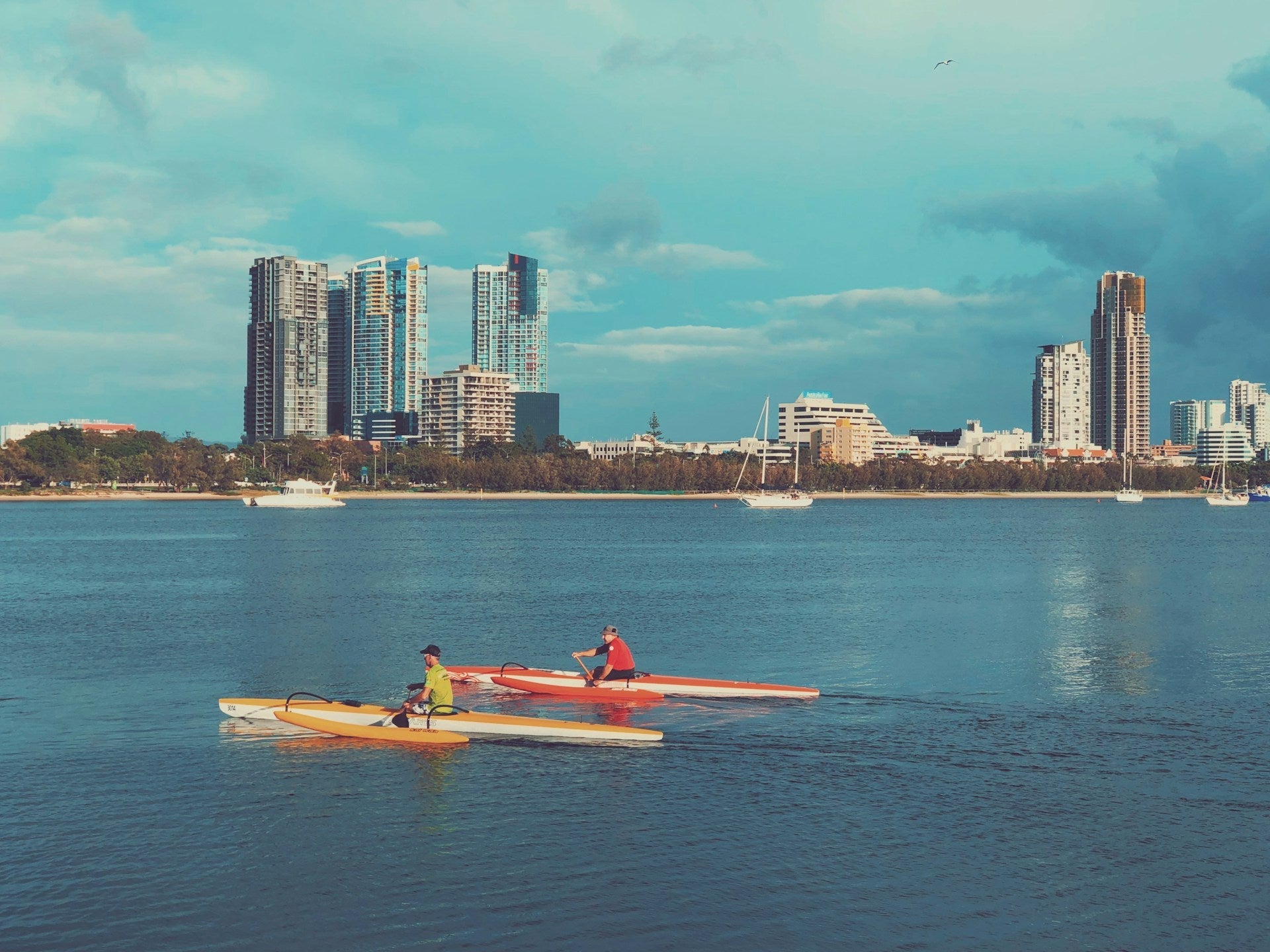
Staying Cool and Protected on Sydney Harbour
Choosing the right kayak clothing for Sydney Harbour in peak summer is about comfort and safety. The sun is harsh, the glare off the water is strong, and the air often feels heavy. If you are out for more than a quick paddle, what you wear can decide whether you finish fresh or finish fried.
Regular gym gear or swimmers usually do not cut it. Cotton stays wet and heavy, loose shorts ride up, and thin straps do not sit well under a PFD. You can end up with sunburned shoulders, nasty chafe, and a PFD that shifts every time you rotate. Purpose-designed kayak clothing solves these problems with fabrics and cuts made for long, salty, sweaty sessions, so you can focus on your stroke instead of your skin.
Understanding Sydney Harbour Summer Conditions
From late winter into late summer, Sydney Harbour throws plenty at paddlers. We get:
- Very high UV, even on overcast days
- Intense glare bouncing back off the water
- Sea breezes that cool your skin but dry it out
- Water that can feel refreshing on top but cooler underneath
Add salt and sweat and your skin works hard. On longer paddles, salt crystals grind into seams, straps, and waistbands. Dehydration creeps in faster when you are working hard in humid air, and any small rub spot can turn into a raw patch by the time you head back to the beach.
Local factors play a role too. Ferry wash, powerboat chop and wind against tide can knock you around, so you need clothing that stays put when you remount your ski or climb back into your kayak. Loose tops that flap or shorts that bunch up under you are more than annoying. They distract you when you should be reading the water.
Core Principles of Smart Kayak Clothing
Good summer kayak clothing has a few clear jobs: protect you from UV, help you stay cool, dry quickly between splashes and keep bulk low so you can move freely. That is why most paddlers shift away from everyday fabrics.
Here is how common fabrics compare in hot conditions:
-
Cotton: soft at first, but soaks up water and sweat, stays wet, rubs, and offers poor sun protection
-
Technical synthetics: light, quick drying, wick sweat off your skin, often with built-in UPF
-
Merino blends: can feel cooler and handle odour well, but may be a bit warmer and slower to dry
- Thin neoprene: handy in cooler water or wind, but can feel hot for long periods in peak heat
Seam placement matters just as much as fabric:
- Minimal seams around the hips and underarms
- Flatlock stitching that lies flat against the skin
- Panels shaped for paddling, not general sport use
These details reduce friction where your PFD presses, where your arms swing, and where you sit and rotate.
Managing Sun, Chafe and PFD Fit
For your upper body, we usually suggest long-sleeve tops rather than short sleeves or singlets. A lightweight UPF rash top or paddle jersey with a higher collar gives your neck, shoulders and forearms coverage without feeling heavy. Mesh panels in low-sun areas can help air flow through while still protecting key zones.
Legs often get forgotten, but in a surf ski your thighs, knees and shins get hammered by reflected sun. Common options are:
- UPF leggings that cover ankles to waist and stay put when wet
- Paddle shorts with a longer leg to stop riding up on the seat
- Thin, light fabrics over the knees if you prefer shorts
Accessories make a big difference on Sydney Harbour:
- Caps or visors that fit under helmets if you are in rougher conditions
- UV buffs that can cover your neck, ears and even hands when needed
- Fingerless paddle gloves for grip and to protect the backs of your hands
- Sunglasses with a retainer so they stay on in chop or during a remount
Chafe is the other summer enemy. Common hot spots for surf ski and ocean kayak paddlers include:
- Sit bones and inner thighs where you contact the seat
- Lower back where shorts or leggings meet the back of your PFD
- Underarms and along the sides of the torso under PFD straps
When you choose gear, look for soft waistbands that do not cut in, underarm cuts that let your elbows come through cleanly, and fabrics that have a bit of grip on the seat without feeling like sandpaper. Anti-chafe balms can help a lot on long training days, especially at the seams of shorts and around PFD edges.
Fit is key: if clothing is too tight, seams dig in and restrict breathing. If it is too loose, it folds and gathers under your PFD, which can rub and trap heat. Rinse gear in fresh water after paddles so salt does not sit in the fabric, and rotate outfits through the week so items fully dry between uses.
Your PFD is part of the clothing system, not an add-on. A low-profile racing PFD sits differently to a bulkier touring or recreational model, so the cut and fabric of your top should match what you actually wear. Longer tops that tuck under the PFD without riding up feel better than short tees that bunch around your waist.
When you try new tops or shorts, put your PFD on and sit in your ski or kayak position. Swing your arms, simulate a paddle stroke, twist your torso. Check for:
- Straps rubbing your neck or underarms
- Fabric bunching under the PFD belt or shoulder straps
- Any hot spot that might grow annoying after an hour or two
For Sydney’s hottest days, you might choose slightly different outfits depending on your session.
For an early morning training paddle, a long-sleeve UPF top, light paddle shorts or leggings, cap, sunglasses and a slim PFD often work well. By midday, when the sun is highest, many paddlers go for full-coverage tops and leggings, plus extra water and more frequent splash cooling.
On downwind runs when the sea breeze builds, you may be getting constant spray. A snug top that does not flap, close-fitting bottoms that will not slide around during remounts, and bright colours for visibility among Harbour traffic all help. Reflective details are handy if you are out at first light or coming back near dusk, and a PFD-compatible hydration system keeps water within easy reach.
Gear Tips for Summer Kayak Clothing
At Nordic Kayaks NSW we focus on gear for surf ski and ocean kayak paddlers, so the same principles run through the clothing and accessories we stock. When you are choosing pieces, a simple checklist helps:
- Does it fit well when seated and rotating?
- Does it have a decent UPF rating for top and legs?
- Are seams away from common rub zones?
- Does it sit cleanly under your PFD and straps?
- Are care instructions simple enough that you will actually follow them?
Test paddling new clothing on familiar Harbour routes can highlight what works for your stroke style, remount technique and usual conditions.
Smart kayak clothing lets you stay cooler, avoid painful chafe, paddle longer with less fatigue and still meet PFD safety rules. A quick gear audit before the next heatwave, checking sun coverage, seam comfort and PFD fit, can make a big difference to how much you enjoy Sydney Harbour in peak summer.
FAQ
1) What should I wear for a summer paddle on Sydney Harbour?
Aim for a long-sleeve UPF-rated top, lightweight paddle shorts or leggings, a wide-brim hat or visor, sunglasses with a retainer and a comfortable PFD. Quick-drying technical fabrics are usually better than cotton.
2) Is it better to paddle in short sleeves to stay cooler?
Not usually. A breathable long-sleeve top often feels cooler over time because it blocks harsh UV and reduces sunburn and dehydration. Focus on airflow and fabric, not bare skin.
3) How do I stop my PFD rubbing my neck and shoulders?
Make sure your PFD and top both fit correctly and are adjusted while you sit in your ski or kayak. Look for tops with soft, low-friction fabric at the neck and shoulders, and use a buff or anti-chafe balm where straps touch skin.
4) Do I need different kayak clothing for surf ski and sea kayaking?
The main ideas are the same, but surf ski paddlers often prefer lower-bulk, very breathable gear because they work harder and get wetter. Sea kayakers may choose slightly warmer or more protective outer layers for longer trips.
5) How often should I replace my kayak clothing?
Replace items when fabric thins, stretches out, or stops wicking and drying well. Heavy use in sun and salt can wear gear fairly quickly, so rinsing after each paddle and following care instructions helps extend its life.
Stay Comfortable On The Water With The Right Gear
Choosing the right layers makes every paddle more enjoyable, and we have carefully selected pieces to suit Aussie conditions. Explore our range of kayak clothing so you stay dry, warm and free to move on every session. If you are unsure what you need for your local conditions or paddling goals, contact us and we will help you kit up with confidence at Nordic Kayaks NSW.